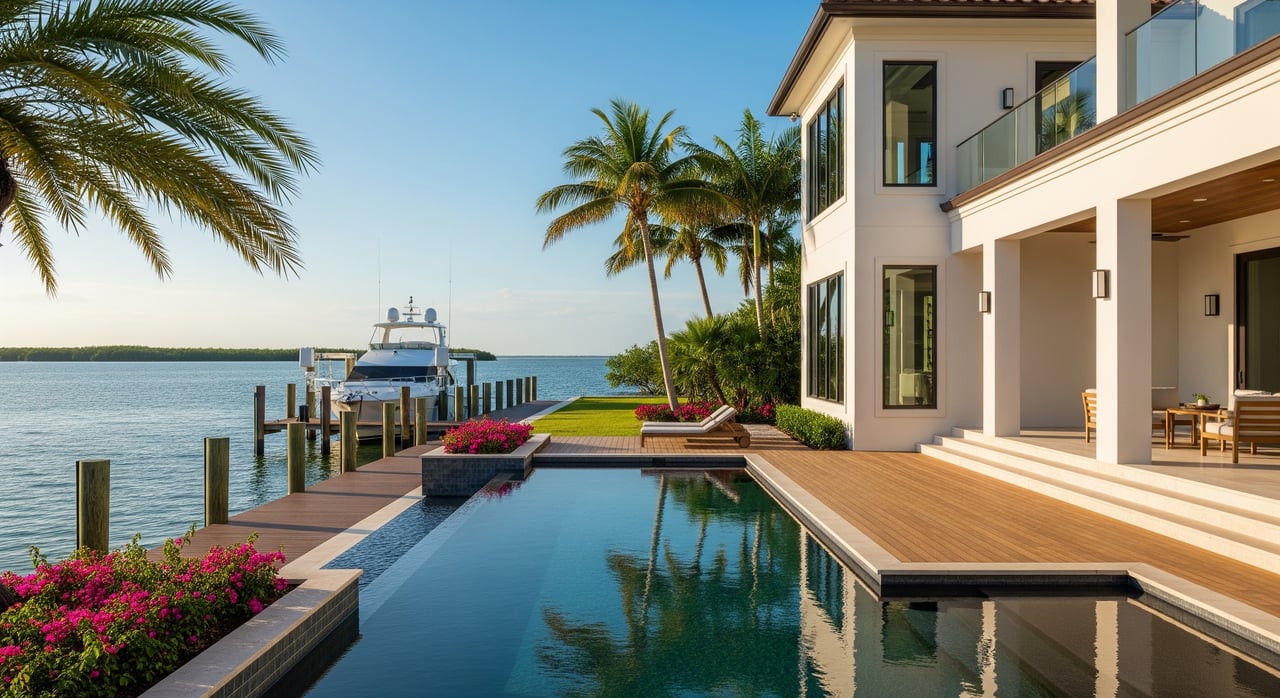
What makes two Sarasota waterfront homes with the same square footage sell for very different prices? On the water, the details do the heavy lifting. From the type of shoreline to boat access and elevation, buyers pay for specific features that deliver lifestyle and peace of mind. If you plan to sell, you want to spotlight those strengths and remove uncertainty.
In this guide, you will learn the Sarasota factors that push value up or down, the documents and inspections that help you defend a premium, and smart pricing and marketing moves that attract qualified buyers. Let’s dive in.
Why waterfront pricing is different
Waterfront homes in Sarasota are not one-size-fits-all. You see a mix of Gulf-front, bayfront, canal-front, and freshwater properties. Demand is strong for quality waterfront with good navigation and views. Because properties are so different, it is harder to find true apples-to-apples comps. That is why your pricing strategy must focus on the specific waterfront attributes your home offers.
Water type drives value
Not all water is valued the same. Direct Gulf frontage with unobstructed beach views usually commands the highest premiums. Bayfront homes often follow, especially when they have deep-water access and postcard sunsets. Canal-front values vary with depth, width, and bridge clearances. Freshwater lakes and ponds attract buyers who prioritize views over boating and often have a different pricing profile.
Boat access and navigation
Buyers who own boats will pay for convenience and safety. Deep-water access, a quality dock, and simple routes to the Gulf matter. Bridge height, channel depth at mean low tide, and proximity to fuel and marinas all influence price. A property that can accommodate a larger boat often earns a premium.
View, frontage, and orientation
Open-water views, long sightlines, and western exposure for sunsets increase appeal. Linear frontage and usable waterfront space also matter. Spaces for lounging, launching, or entertaining by the water help buyers picture their lifestyle, which supports stronger offers.
Elevation and flood zone
Lot elevation, FEMA flood zone, and how the home sits relative to base flood elevation are key. These details influence insurability, perceived risk, and carrying costs. An elevation certificate and visible mitigation can give buyers confidence and help you defend your price.
Seawall and dock condition
Seawalls and docks are expensive to repair or replace. Their age, materials, and condition are major valuation factors. A newer or well-maintained seawall and a sturdy, permitted dock can reduce buyer friction and justify a higher asking price.
Documents that strengthen your price
Gathering the right paperwork before you list can be the difference between a cautious buyer and a confident one. It also helps appraisers understand your home’s value.
Elevation certificate and flood info
If you have an elevation certificate, include it. If not, consider obtaining one. Buyers and lenders want to see how the home sits relative to flood risk. You can direct buyers to confirm flood zones using the FEMA Flood Map Service Center. If you have added flood or wind mitigation, document it.
Survey and mean high-water line
A recent survey that shows boundaries, waterfront footage, and the mean high-water line helps clarify what you own and where structures sit. If you have questions on parcel details, the Sarasota County Property Appraiser provides public records and parcel maps that can help.
Seawall and dock inspection reports
Hire a qualified marine contractor to inspect the seawall and dock, and get written estimates for repairs. These reports provide clarity on condition and replacement cost. That clarity helps buyers and appraisers account for waterfront infrastructure in value.
Permits and approvals
Collect permits for dock, lift, and seawall work, plus any recent remodels, roof, HVAC, windows, or hurricane improvements. Clean permit history reduces risk of delays. For local rules and applications, point buyers to Sarasota County permitting resources. Shoreline and in-water work may involve state-level approvals. The Florida Department of Environmental Protection outlines coastal permitting requirements and guidelines.
Smart pricing strategy for top dollar
A strong pricing plan blends market data with your home’s unique waterfront features. Aim to reduce uncertainty and highlight the lifestyle your property delivers.
Timing and seasonality
Florida’s peak buyer traffic typically runs from November through April. Listing in high season can bring more out-of-town second-home buyers and boaters into the market, which may increase exposure and competition for your listing.
Comp selection and adjustments
Waterfront comps are tricky because every parcel is different. Your pricing should adjust for water type, frontage, depth, dock and lift quality, seawall condition, elevation, view, and navigability. Your agent should prepare a CMA using recent sales and show the qualitative adjustments that reflect waterfront specifics. Local resources like the Sarasota Association of Realtors and statewide insights from Florida Realtors can help ground your strategy in current market context.
Pricing psychology
Two approaches can work. You can price slightly below recent top comps to spark strong showings and potential multiple offers. Or you can price at the high end and wait for a match that sees the full value. The right call depends on your home’s uniqueness and current inventory. In either case, put your documentation front and center to justify your ask.
Pre-listing fixes that pay off
Waterfront buyers scan for red flags and maintenance risks. Addressing obvious items upfront supports your price and speeds negotiations.
- Service or repair exterior corrosion, peeling paint, and weathered trim.
- Confirm roof, windows, doors, and shutters are in good condition and document any hurricane-rated upgrades.
- Tidy the shoreline area and ensure the dock and lifts show well, even if you plan to credit for future work.
- Complete a pre-listing home inspection to avoid surprises.
If you have recent quotes for wind or flood coverage, share them. Clear cost expectations reduce buyer hesitation and can expand the pool of qualified offers.
Marketing that makes waterfront features shine
Your marketing should sell the water lifestyle as clearly as the home.
- Use high-quality aerial and drone photography to show the setting, approach routes, and proximity to marinas and beaches.
- Capture both high and low tide scenes so buyers understand real-world use.
- Add a simple boat-route map and estimated travel time to open Gulf waters.
- Include twilight photography to highlight sunsets and evening ambience.
- Specify boat details like maximum length, depth at mean low tide, and whether fixed bridges are on the route.
- Spotlight hurricane mitigation and coastal-grade materials to reduce perceived risk.
Context about local waters can be helpful for out-of-town buyers. Direct them to respected resources like Mote Marine Laboratory for local marine science context and the Florida Fish and Wildlife Conservation Commission for boating and submerged lands guidance.
Appraisal and closing considerations
Appraisers usually rely on the sales comparison approach. When comps are limited, they may lean more on the cost approach for specialized items like seawalls and docks, or the income approach if the property is actively rented. Help them with complete documentation.
- Provide your elevation certificate, survey, permits, and seawall or dock reports.
- Note functional benefits, such as deep-water access or the ability to moor a certain boat size.
- Share recent quotes for major work so appraisers can quantify adjustments.
Waterfront transactions can involve more agencies. Docks, seawalls, or shoreline stabilization can require county and state approvals, and sometimes federal review. For planning and resilience context, the NOAA Sea Level Rise Viewer offers helpful visuals. Buyers who understand current conditions and local mitigation efforts tend to move forward with more confidence.
Legal and use factors to clarify early
Buyers want to know what they can and cannot do with the property. Clarify early to keep your price intact during due diligence.
- Confirm zoning, setbacks, and any environmental buffers that affect expansion or rebuild.
- Gather HOA or condo rules, including rental regulations that may shape demand.
- Verify littoral or riparian rights and any submerged land issues related to permanent structures.
- Ensure prior shoreline work is properly permitted. County and state sources, including Sarasota County government and the Florida DEP, can provide process guidance.
What this means for your sale
Top dollar comes from two things: presenting a compelling waterfront lifestyle and eliminating uncertainty. When you document elevation, show strong seawall and dock condition, and explain boat access clearly, you tilt the playing field in your favor. Add seasoned pricing, targeted marketing, and thoughtful timing, and you create the conditions for a premium result.
If you are planning to sell a waterfront property in Sarasota, you do not have to figure this out alone. Partner with a local expert who pairs boutique-level service with powerful marketing reach. To discuss timing, pricing, and a tailored pre-listing plan, connect with Robert Krasow.
FAQs
How do Sarasota water types impact price?
- Gulf-front often commands the highest premiums, followed by bayfront with deep-water access, then canal-front and freshwater, which vary by depth, frontage, and use.
What documents help me justify a higher asking price on a waterfront home?
- Elevation certificate, recent survey, seawall and dock inspection reports, permits for shoreline and home improvements, and insurance cost estimates.
When is the best time to list a Sarasota waterfront home?
- Buyer traffic is typically strongest from November through April, which can increase exposure to second-home buyers and boaters.
How should I think about seawall or dock repairs before listing?
- Either complete priority repairs to reduce risk or provide inspection reports and written estimates so buyers can price work accurately and proceed with confidence.
Where can buyers verify flood zones and long-term coastal risk?
- Buyers can check the FEMA Flood Map Service Center for flood zones and review the NOAA Sea Level Rise Viewer for planning visuals.
What local sources support pricing and permitting decisions?
- The Sarasota Association of Realtors for market context, Sarasota County government for permitting, and the Florida DEP for coastal rules.