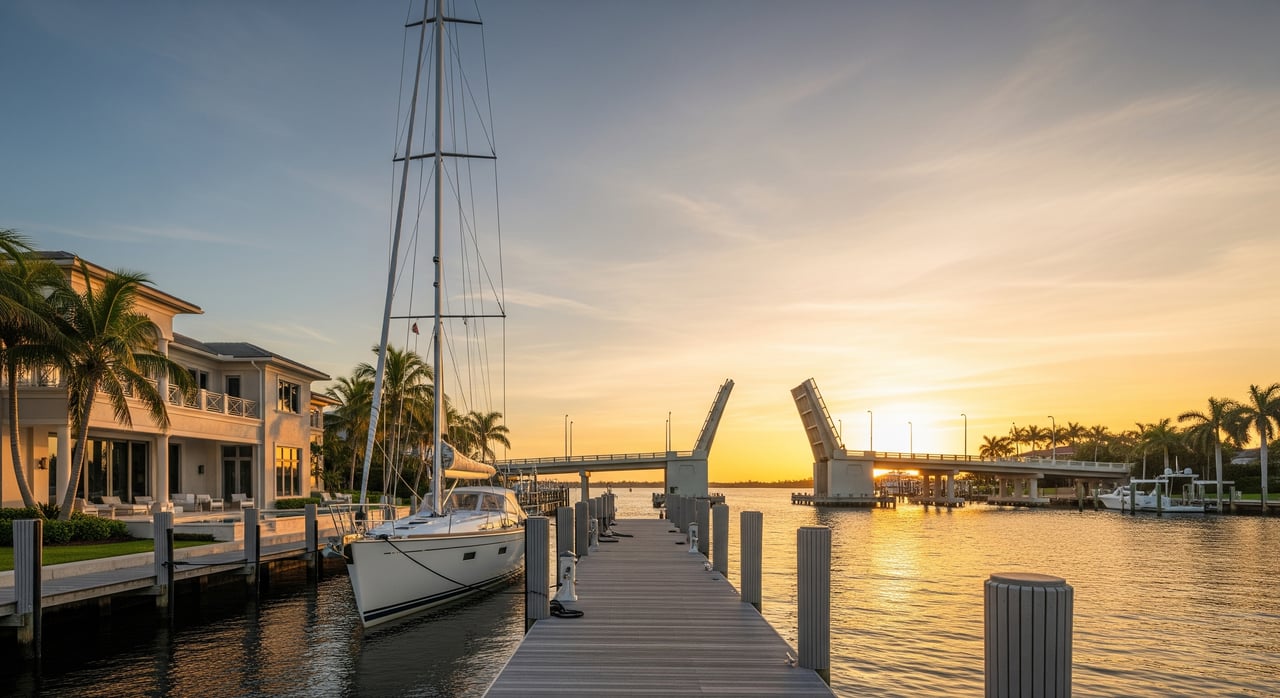
If you love boating, a waterfront home in Sarasota can feel like a dream. But if you cannot clear a bridge on the way to the Gulf or the Intracoastal Waterway, your dream route can turn into a detour. You want access that fits your boat today and keeps resale options open tomorrow. This guide explains how bridge clearances work in Sarasota, what to verify before you buy or sell, and how to avoid surprises. Let’s dive in.
What bridge clearance means
Bridge clearance is about two heights: the bridge and your boat.
- Vertical clearance is the distance from the water surface to the lowest part of a bridge span when closed.
- Your boat’s air draft is the height from the waterline to the highest fixed point on your boat.
If your air draft is higher than the usable clearance at the time you pass, you will not fit. For sailboats, the mast is usually the tallest point. For powerboats, look at antennas, radar arches, and tops.
Vertical vs horizontal clearance
- Vertical clearance tells you if you can fit under the bridge.
- Horizontal (channel) clearance tells you how much width you have to steer through. This matters for larger vessels and when currents or wind push you off line.
Both matter for safe, stress-free passage.
Tides, datums, and real-time clearance
Published bridge clearances and charted depths use specific tidal datums, such as Mean High Water or Mean Lower Low Water. The actual clearance you have at any moment depends on the tide height at that time.
- Effective clearance equals the published clearance minus the current tide offset relative to the bridge’s reference datum.
- Sarasota’s tide range is moderate, but even a foot of extra water can be the difference between “go” and “no go.” Wind-driven water levels and storm surge can also reduce clearance.
Plan around tide predictions and give yourself a safety margin.
Sarasota waterways at a glance
Sarasota Bay connects to the Gulf through several passes and is lined with canals, bayous, and the Intracoastal Waterway. Your access depends on where your property sits.
- Homes near a pass or on deeper channels often have quicker Gulf access.
- Properties on canals or inside the bay may sit behind fixed bridges or movable spans.
- Maintenance dredging, turning basins, and channel markers influence day-to-day navigation and long-term access.
Common bridge types you will encounter
- High fixed spans. Newer causeways often allow taller vessels, with clearance varying by location.
- Lower fixed bridges. These can limit sailboats and taller cruisers.
- Movable bridges. Bascule or swing bridges open on schedules or on request, but they can have operating hours and restrictions.
Always verify the route, bridge types, and current operations before you rely on a passage.
How to verify a route for your vessel
Use this step-by-step workflow to confirm your path from dock to the Gulf or ICW:
- Map the route. Identify every bridge and channel you will use between the property and your destination.
- Pull the relevant NOAA nautical charts and note the chart datums, marked channels, and bridge symbols.
- For each bridge, check U.S. Coast Guard bridge listings and Local Notices to Mariners, along with FDOT bridge information, to confirm:
- Published vertical clearance and its reference datum.
- Horizontal clearance and marked navigation aids.
- If movable, the opening schedule, contact info, and any restrictions.
- Check NOAA tide predictions for your planned transit and calculate the effective clearance at that time. Confirm you are comparing the same datum.
- Call a local marina, harbormaster, or the bridge tender to confirm real-world conditions, recent maintenance, or temporary restrictions.
- For purchases, request recent depth soundings near the dock and copies of dock permits from the county or city. Confirm permitted vessel size and any HOA or recorded restrictions.
Buying a Sarasota waterfront home
Bridge clearances shape what you can own and how you can use it.
- Boat choice. Your preferred sailboat mast height or powerboat profile might not fit your route. Some owners choose a lower-profile vessel or plan mast stepping.
- Resale value. Properties with deepwater and less-restrictive access often appeal to a wider buyer pool.
- Storage alternatives. If clearances or depths limit your boat, consider marina slips, dry-stack storage, or haul-out options.
Buyer due diligence checklist
- Identify your route to the Gulf or ICW, including every bridge.
- Compare your vessel’s air draft to each bridge’s clearance at the expected tide.
- Verify bridge operations, opening schedules, and any temporary notices.
- Get recent depth soundings near the dock and along your canal.
- Collect dock permits and confirm permitted boat size or lift capacity.
- Speak with a local marina or harbormaster about typical conditions and best practices.
Selling a waterfront home
Clear, verified information makes your property easier to evaluate and can help you negotiate with confidence. Buyers will want to see the path from your dock to open water and how the property supports different vessel types.
What to include in your listing package
- A simple route map noting bridges and channels from your dock to the Gulf or ICW.
- Published bridge data you have confirmed through authoritative sources.
- Recent depth soundings near your dock and along your canal, if available.
- Copies of dock and lift permits, plus any approvals for past improvements.
- Notes on local marinas and storage alternatives nearby.
Dock design and permitting basics
Dock length, setbacks, lift dimensions, and dredging are regulated by local and state agencies. Depending on your location, you may need approvals from county or city departments, as well as state and federal agencies for certain work.
- Local permitting governs dock size, location, and certain structures.
- State and federal approvals can apply to dredging and larger changes.
- Seawall and channel maintenance can affect long-term access, so ask about schedules and responsibilities.
If you anticipate owning a larger vessel, review permits early to understand what is allowed on your lot.
If your boat will not fit
You have options if bridge clearance limits your current vessel.
- Marina or leased slip. Keep your boat where it can access the Gulf directly.
- Dry-stack storage. A convenient option for many powerboats with regular launching.
- Mast stepping. Practical for some sailboats but adds time and cost.
- Land transport. Trailering or short-distance transport can solve one-off moves.
Make confident decisions with local guidance
Choosing the right waterfront home is easier when you know your numbers and your route. A clear plan for bridge clearances, tides, and permits protects your lifestyle and your investment. If you want help mapping a route, gathering the right documents, or presenting your property to the widest qualified audience, connect with a trusted local specialist. Reach out to Robert Krasow for thoughtful, bilingual guidance and award-backed representation in Sarasota’s waterfront market.
FAQs
In Sarasota, how do I check if my sailboat can clear local bridges?
- Compare your vessel’s air draft to each bridge’s published vertical clearance, account for tide relative to the clearance datum, and verify operations and conditions with authoritative sources and local harbormasters.
Do tides and wind really change bridge clearance in Sarasota?
- Yes. Tides raise or lower water relative to the bridge’s reference datum, and wind or surge can push water levels higher, which reduces usable clearance, so plan transits for favorable tides.
Are movable bridges in the Sarasota area always available on request?
- Many movable bridges open on request or on a schedule, but maintenance, operating hours, or temporary restrictions can apply, so always confirm with current notices and the bridge tender.
What permits affect my dock if I plan to keep a larger boat?
- Local permits set dock dimensions and setbacks, and certain projects like dredging or significant modifications may require state and federal approvals, so review existing permits and speak with the relevant agencies early.
As a seller, how can I make my waterfront listing more attractive to boaters?
- Provide verified bridge and route information, recent depth soundings, and complete dock and lift permits, which help buyers assess fit and value quickly.